Equally striking is the performance of India’s services sector, which has become the engine of export growth. Between April and September 2025, services exports surged and now account for nearly half of the country’s total exports. From IT-BPM and fintech to artificial intelligence (AI), cybersecurity, and climate advisory, India is steadily positioning itself as a global hub for high-value services, leveraging its deep talent pool and digital infrastructure.
On the trade front, India is accelerating its integration into global markets. Over the past years, multiple free trade agreements have been signed, with ongoing negotiations with the US, EU, and several emerging markets. These efforts align with India’s ambitious target of achieving US$2 trillion in exports by 2030, underscoring its intent to play a larger role in global commerce.
GST 2.0: The driving force behind Budget 2026
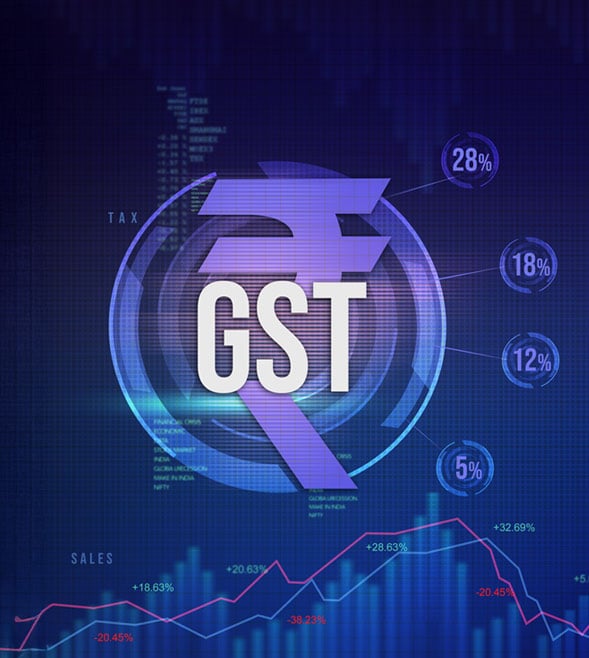
The GST 2.0 overhaul, introduced in September 2025, stands out as one of the most defining structural reforms shaping the run-up to Budget 2026. By trimming four slabs rate structure, the Government created a leaner, more transparent tax regime that reduces complexity and rationalises rates across sectors. Importantly, youth-driven industries such as consumer tech, entertainment, and lifestyle services have seen tax relief, recognising their higher propensity to spend and their role in driving demand-led growth.
Looking ahead, Budget 2026 is expected to deepen the GST 2.0 reform agenda, building on simplified tax slabs and citizen-centric rate cuts. By correcting inverted duty structures, rationalising rates, and embedding tech-driven compliance, GST 2.0 is transforming India’s indirect tax regime into a leaner, fairer, and more transparent system. Aligned with principles of growth, equity, resilience, and global competitiveness, these reforms are more than fiscal adjustments—they are catalysts for India’s next phase of development. Budget 2026 will harness GST 2.0 to boost consumption, empower MSMEs, and strengthen domestic manufacturing, laying the foundation for India’s march toward Viksit Bharat 2030.
The two engines of competitiveness before Budget
Budget 2026 is expected to deliver a major liquidity push for the export sector. Key measures may include:
- Refunds on capital goods: Extending ITC refund formulas to cover capital goods, easing cash flow pressures.
- Reverse charge relief: Allowing ITC utilisation for reverse charge payments, reducing out-of-pocket expenses.
- Automated refunds: Tech-driven refund mechanisms with 90% provisional refunds, reducing working capital stress.
- Employee expense credits: Removing ITC restrictions on employee-related expenses, enabling smoother credit flow.
At the heart of India’s development agenda lies Research and Development (R&D) funding. By boosting investments in frontier technologies, the government aims to transform India into a knowledge-driven economy. Linking tax reforms with R&D incentives ensures that businesses not only save on compliance costs but also channel resources into innovation. This synergy enhances productivity, drives new industries, and positions India as a global leader in sectors such as clean energy, biotechnology, and semiconductors.
Crucially, R&D funding is not just about innovation—it is about strategic competitiveness. Nations that lead in technology shape global supply chains, set standards, and command economic influence. For India, scaling R&D investments will determine its ability to move up the value chain, reduce import dependence, and secure leadership in critical sectors like semiconductors, AI, and green hydrogen.
Unlocking growth: Expectations from Budget 2026–27
One of the big expectations from Budget 2026 is relief on cash flow pressures, with measures designed to unlock working capital and ensure seamless circulation of funds within businesses. The focus is on efficient refund mechanisms and smoother Input Tax Credit (ITC) processes without compromising fiscal collections.
Key recommendations may include:
- Extension of Inverted Duty Structure (IDS) refunds: Covering goods, services, and capital goods to protect MSMEs and smaller manufacturers.
- Export rule liberalisation: Aligning taxation of R&D and innovation services with export treatment, eliminating unnecessary burdens.
- Digitising customs litigation: Amending the Customs Act, 1962 to permit fully digital filing of appeals and correspondence, aligning with the Digital India vision.
Budget 2026 as a blueprint for innovation-led growth
India’s Budget 2026 must set a clear, confidence-building roadmap that marries GST simplification with growth-oriented reforms. Rationalising rates, fixing inverted duty structures, and enabling seamless ITC utilisation supported by faster, digital refunds will unlock liquidity, reduce compliance friction, and boost competitiveness.
Coupled with export liberalisation and stronger R&D incentives, these measures would catalyse investment, job creation, and productivity. Sustained execution will accelerate India’s transition to a resilient, innovation-led, and globally competitive economy—delivering inclusive prosperity on the path to Viksit Bharat 2030.
Devika Dixit, Executive Director, and Devansh Munjal, Associate Director, Grant Thornton Bharat, have also contributed to this article.
This article first appeared in The Economic Times on 13 January 2026.
Learn more about how our GST 2.0: Simplifying India’s tax framework services can help you