GST Compendium: October 2026
Recent GST and customs developments bring changes to tax compliance, input tax credit (ITC), refunds, exports and dispute resolution.
For more updates follow Grant Thornton Bharat on WhatsApp
India’s GST framework is entering a new phase of transformation. The 56th GST Council meeting has delivered one of the most sweeping tax overhauls since 2017 — a reset that goes beyond rates to touch profitability, liquidity, and reputation. These reforms are designed to simplify structures, rationalise rates, and support both businesses and consumers, marking a pivotal step in India’s journey towards Atmanirbhar Bharat.
Transition from a four-slab structure to a simplified two-slab system — 5% for essentials and 18% for standard items — with a 40% slab for luxury and sin goods (effective 22 September 2025).
Essential food items and FMCG products moved to the 5% slab; small cars, motorcycles, ACs, and electronics shifted to the 18% slab.
36 life-saving drugs exempted from GST; life and health insurance policies brought under GST exemption.
GST registration process to be completed in just three working days.
Goods and Services Tax Appellate Tribunal (GSTAT) to start operations by September 2025.
Risk-based provisional refunds for zero-rated exports and inverted duty structure (IDS) cases.
Alignment of post-sale discounts with credit notes and removal of taxability disputes for intermediary services.
These reforms mark a landmark shift in India’s tax landscape. With rationalised rates, improved affordability, and streamlined compliance, GST 2.0 is expected to:
Managing the GST reset requires more than tax adjustments — it demands coordinated action across finance, operations, and compliance. Our rapid support framework enables management to respond with clarity, discipline, and preparedness through:
Managing inventory, ITC, and procurement flows.
Identifying areas for renegotiation and client/vendor communication.
Strengthening records, processes, and audit-readiness.
Evaluating rate changes, exemptions, margins, and cash flows.


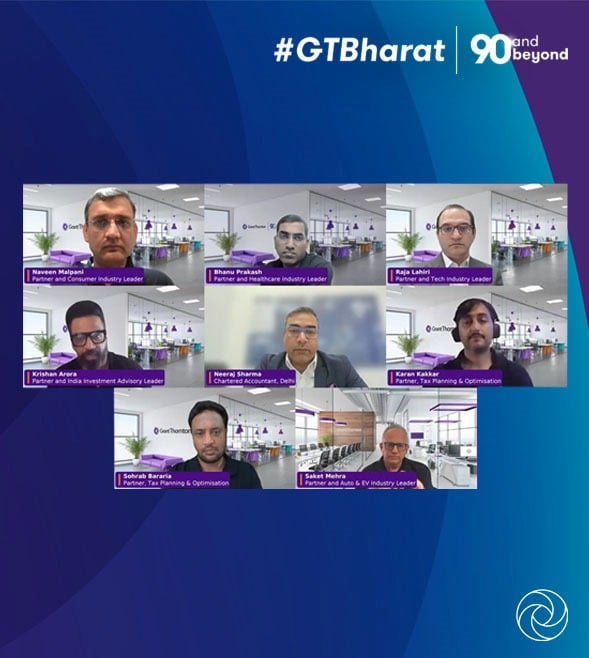
We hosted a webinar on the '56th GST Council meeting: Decoding the fine print & impact on industry', marking a shift to GST 2.0—a simpler, more predictable, growth-focused tax system. Experts discussed macro reforms and sectoral implications for pharma & healthcare, FMCG, automobiles, real estate, and technology, alongside transitional challenges in pricing, contracts, and supply chains.

The industry will benefit from reduced pricing with the lowering of applicable GST rates, and patients will experience affordable access to critical drugs.

In #GTBharat’s PolicyCast, our leader, Krishan Arora decodes the Council’s reforms from a policy lens. Watch the full discussion for actionable takeaways.

Grant Thornton Bharat hosted a session on the 56th GST Council meeting, where experts unpacked key measures, sectoral impacts, and GST 2.0 readiness.

Recent GST and customs developments bring changes to tax compliance, input tax credit (ITC), refunds, exports and dispute resolution.

The 57th GST Council Meeting, held on 8 October 2026, recommended several significant process reforms resulting in ease of doing business, reducing litigation, and addressing the long-standing concerns of the taxpayers.
Grant Thornton Bharat’s PolicyCast is your window into policy, tax, and regulatory developments. Each episode features expert perspectives on issues that matter to businesses, individuals, and the wider economy.