The first engine is MSMEs. As of September 2025, there are approximately 6.82 crore MSMEs registered on the Udyam Registration Portal and the Udyam Assist Platform in India. These enterprises employ around 29.77 crore people and are a vital part of the economy, contributing significantly to GDP and exports. However, the quality of output often leaves much to be desired, especially when viewed from the perspective of global markets. MSMEs also struggle to attract young talent, as they lack the glamour associated with IT startups. Out of nearly 15 lakh engineers graduating every year, a large proportion of students gravitate towards computer science or related branches, while many others attempt to learn coding to enter IT companies. China’s manufacturing success is a model that needs to be studied and adapted by India’s younger generation. Since incentives influence behaviour, the Budget should make provisions to attract this talent by engaging non circuital branches in building skills related to design, demand forecasting across geographies and the creation of efficient supply chain ecosystems.
The second engine is driving efficiency in government by leveraging technology to improve interactions with citizens and businesses. For a country with a population of 140 crore, the only way to avoid bureaucratic expansion is through effective use of technology. While information technology has significantly improved efficiency in central government departments such as Income Tax, Passport and the Ministry of Corporate Affairs, similar progress is needed across state government departments including health, education, social welfare, revenue and policing. Technologies such as GIS based planning, artificial intelligence, data analytics, drone surveys and blockchain can bring major improvements in planning and execution. Given India’s scale, the returns on such investments are far higher than in developed economies. Artificial intelligence can analyse large data sets to forecast challenges, design proactive policies and identify fraud in procurement and distribution systems. Data analytics can further refine welfare targeting to ensure benefits reach those most in need. The government must operate as a single integrated system, with seamless coordination between the Centre and the states. Digital public infrastructure should be expanded to cover state and local government functions. For this transition to succeed, the Budget must allocate greater resources towards artificial intelligence research hubs, secure cloud infrastructure and capacity building for officials. Integrating artificial intelligence and data analytics across ministries will help the government move from a reactive to a proactive mode of governance.
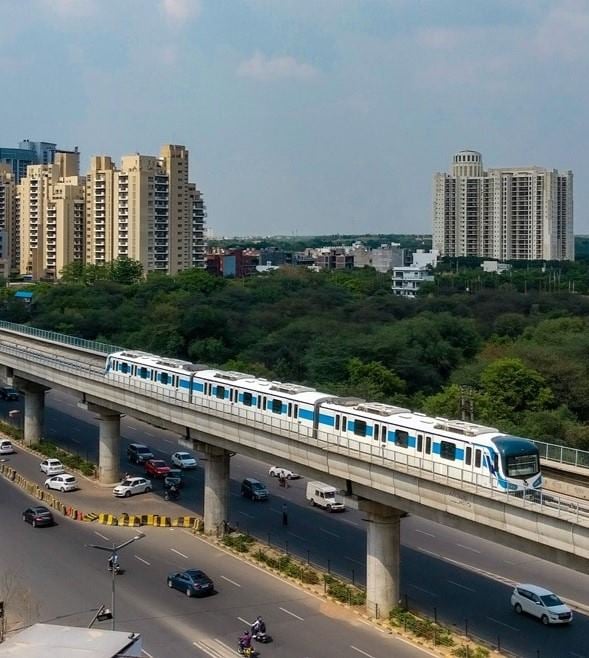
The third engine is infrastructure. India has made significant progress over the past two decades, yet it remains far from matching developed nations in terms of energy, roads, railways, ports and airports. The gaps are particularly visible in quality, per capita capacity and performance metrics. Large scale public investment in infrastructure has rightly remained a priority in successive budgets and must continue consistently until 2047. India’s energy needs are expected to grow exponentially, accompanied by global pressure to adopt clean energy and green manufacturing practices. This will require sustained development of supporting infrastructure. While the country has made a strong start, continued budgetary support and policy continuity will be essential to remain on course.
The fourth engine of growth is women’s participation in the workforce. Nearly fifty percent of India’s population remains underrepresented in economic activity. The recent labour codes are a step in the right direction, but structural change cannot occur without addressing deep rooted societal biases around gender roles. Policies must actively challenge the stereotype that places the primary responsibility of household management on women. Budgetary innovation will be required to support this shift and enable greater workforce participation.
The fifth engine is manufacturing. India has traditionally been viewed as a service led economy, while China has emerged as the manufacturing hub of the world. This imbalance must change if India is to achieve developed nation status. The country needs to significantly scale manufacturing in high technology and value-added sectors such as semiconductors, aerospace, defence electronics, advanced medical devices and green energy technologies. At the same time, core industries such as automobiles, pharmaceuticals and textiles must be strengthened. The focus must move beyond basic assembly to the development of complete product ecosystems, supported by innovation, skill development, robust physical and digital infrastructure and improved governance.
To achieve these objectives, India must move decisively beyond the status quo. The Union Budget is a critical lever to catalyse this transformation. With the Budget around the corner, it is hoped that decisions will be taken with a clear focus on India’s long-term goal of becoming a developed nation by 2047.
This article first appeared in The Economic Times on 5 January 2026.
Learn more about how our Public Sector Advisory services can help you