-
Business Consulting
Our business consulting specialists offer a comprehensive blend of strategic advisory services. We assess the business, industry, operating model, synergy, skill sets and vision of the organisation and recommend the way forward
-
Digital Natives
Unlock growth with Grant Thornton Bharat's Digital Natives solutions. Customised support for tech-driven companies in healthcare, gaming, and more.
-
New and Emerging Tech
In a world where change is constant, staying ahead means staying adaptable. At Grant Thornton Bharat, we believe the future belongs to those who can evolve quickly, leveraging new and emerging technologies not just as trends, but as strategic levers for transformation.
-
Finance Transformation
Using a holistic approach, integrating digitalisation and digital transformation we help clients achieve transparency, control, governance, and faster decision making through real-time data within the business.
-
Human Capital Consulting
Our Human Capital Consulting team harnesses technology and industry expertise to assist in constructing adaptable organisations with transparency, fostering productive and value-driven workforces, and inspiring employees to engage meaningfully in their tasks.
-
Production Linked Incentive Scheme
Production-linked Incentive Scheme by the Indian government is aimed at boosting manufacturing. Grant Thornton Bharat offers varied services across sectors to help businesses avail of this scheme.
-
Public Sector Advisory
Our Public Sector Advisory team has focused streams, aligned with the core priorities of the Government of India. We are responsible for providing innovative and customized technical and managerial solutions.
-
Tech Advisory
We have amalgamated Digital Transformation, IT Advisory & Information Management and Analytics into a new offering, DigiTech.
-
Direct Tax services
Our tax specialists offer a comprehensive blend of tax services, tax litigation, regulatory and compliance services, helping you navigate through complex business matters.
-
Indirect Tax Services
Get tax services by leading tax firm Grant Thornton India. Our indirect tax services include consulting, compliance and litigation services for corporate, international and transaction tax
-
Transfer Pricing
Our transfer pricing services experts provide a range of services from provision of APA services to handling large global assignments including Country by Country reporting.
-
US Tax
At Grant Thornton, we help individuals and dynamic companies deal with US tax laws, which are one of the most complicated tax legislations across the world.
-
Financial Services - Tax
Best financial consulting services, tailored for small and large businesses by the experts having comprehensive knowledge of domestic laws and access to multifaceted tools to provide a valuable results.
-
Financial Reporting Advisory Services
Our experts have significant hands-on experience in providing IFRS/US GAAP services, end-to-end solutions and support services to fulfil financial reporting requirements.
-
Fund accounting and financial reporting
International operations often lack standardisation and have varied local reporting formats and requirements. Our experts can offer proactive insights, practical guidance, and positive progress and help meet regulatory timeframes.
-
Compliance and Secretarial Services
Our experts can assist in overhauling the entire compliance machinery of the organisation through evaluation of the applicable statutory obligations, monitoring of adequate governance controls, reporting and providing ongoing support.
-
Global People Solutions
As businesses transcend borders, both domestic and global considerations need equal attention. Our interim CFO and financial controller support services help organisations meet the business vision.
-
Finance and accounting outsourcing
Our accounting experts assist organisations in managing their accounting and reporting. Our dedicated Integrated Knowledge and Capability Centre (IKCC), allows us to service both the domestic and global markets efficiently and cost-effectively
-
Centres of Excellence
Strategic business hubs for global delivery
-
Related-party transaction governance
Related-party transactions (RPTs) are common in business structures where organisations engage with their group entities, such as holding companies, subsidiaries, associate concerns, joint ventures, or key management personnel, for various operational or financial purposes.
-
Family Offices and Private Client Services
Grant Thornton Bharat Private Client Services offers tailored consulting for family-owned businesses, focusing on governance, compliance, tax, succession planning, and family office structuring to sustain wealth and preserve legacies across generations.
-
Alerts
At Grant Thornton India, with the help of our tax alerts, we help to provide updates on how to minimise your tax exposure and risks.
-
India investment roadmap
The India Investment Roadmap resource is designed to navigate the complexities of Indian tax and regulatory laws, providing seamless guidance and a comprehensive set of solutions to ensure a smooth process for investors aiming to establish or expand their presence in India.
-
CFO Solutions
Our comprehensive suite of solutions for CFOs
-
Crisis and Resilience
Cyber risks, financial crime and regulatory scrutiny demand strong preparedness. Our forensic team helps organisations build robust crisis and resilience frameworks to protect value and maintain trust.
-
Cyber
In today’s time, businesses have gone through large transformation initiatives such as adoption of digital technologies, transition to cloud, use of advanced technologies et al.
-
ESG consulting
Grant Thornton Bharat offers holistic ESG consulting solutions for sustainable business outcomes. With industry expertise and AI technology, we drive long-term value.
-
Risk analytics
Grant Thornton Bharat’s CLEARR Insights is a state-of-the art data analytics platform that will help you in seamless data analysis and efficient decision-making.
-
Forensic & Investigation Services
The team of forensic consulting services experts consists of the best intelligence corporate experts, and fraud risk, computer forensic experts to deliver most effective solutions to dynamic Indian businesses.
-
Risk Optimisation
Our Governance, Risk and Operations (GRO) services encompass Internal Audit, Enterprise Risk Management, Internal Financial Controls, IT advisory, Standard Operating Procedures and other services.
-
Deal Advisory
Unlike other M&A advisory firm in India, we offer deal advisory services and work exclusively with controlled and well-designed strategies to help businesses grow, expand and create value.
-
Due Diligence
Grant Thornton’s financial due diligence services are aimed at corporate looking for mergers and acquisitions, private equity firms evaluating investments and businesses/promoters considering sale/divestment.
-
Debt & Special Situations Solutions
Grant Thornton Bharat offers specialist debt and special situations consulting services, including restructuring, insolvency, and asset tracing solutions.
-
IPO Services
Grant Thornton Bharat’s IPO services ensure optimal scaling of organisations in the financial markets
-
Transaction Tax Services
Our transaction tax experts understand your business, anticipate your needs and come up with robust tax solutions that help you achieve business objectives ensuring compliance and efficiency
-
Overseas Listing
Overseas listing presents a perfect platform for mid-sized Indian companies with global ambitions. Grant Thornton’s team of experts in listings, work closely with clients during all stages.
-
Valuations
Valuation services are central to every deal lifecycle — from pre-deal strategy to post-transaction integration. Grant Thornton Bharat delivers precise, compliant, and defensible valuations across regulatory, financial reporting, and transaction contexts. Our experts apply deep technical and sector insights to ensure fair value, mitigate risk, and support decision-making for M&A, private equity, litigation, and intangible assets. Every deal begins with the right value — we help you discover it.
-
Financial Reporting Advisory Services
Grant Thornton Bharat Financial Reporting Advisory Services offer end-to-end solutions for complex financial requirements, including GAAP conversions, IPO support, and hedge accounting advisory, ensuring accurate financial reporting and compliance.
-
Financial Statement Audit and Attestation Services
Grant Thornton Bharat offers customised financial statement audit and attestation services, ensuring impeccable quality and compliance with global standards. Our partner-led approach, technical expertise, and market credibility ensure effective solutions for your business needs.
- Agriculture
- Asset management
- Automotive and EV
- Banking
- Education and ed-tech
- Energy & Renewables
- Engineering & industrial products
- Fintech
- FMCG & consumer goods
- Food processing
- Gaming
- Healthcare
- Urban infrastructure
- Insurance
- Media
- Medical devices
- Metals & Mining
- NBFC
- Pharma, bio tech & life sciences
- Real estate and REITs
- Retail & E-commerce
- Specialty chemicals
- Sports
- Technology
- Telecom
- Tourism & hospitality
-
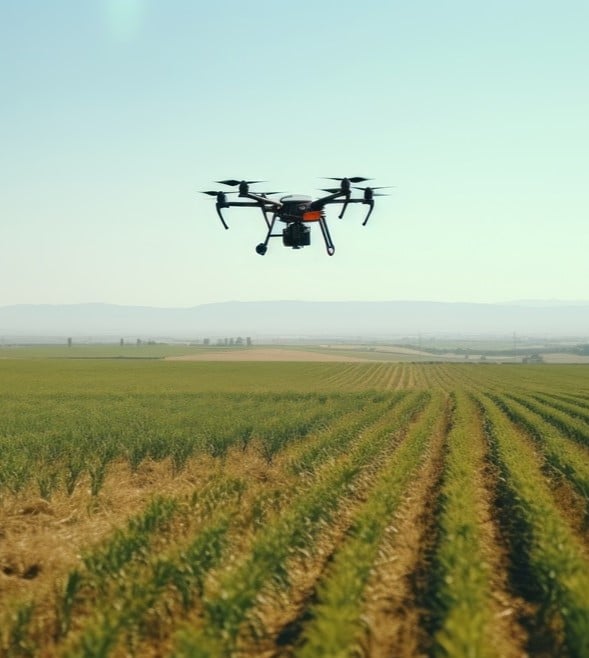
Article What budget 2026 must change to modernise India’s farm machinery marketIndia’s farm mechanisation story over the past decade has been one of scale rather than transformation. -
Thought leadership Co-lending in India: Expanding credit access for MSMEsIn today’s rapidly evolving financial landscape, co-lending has emerged as a key enabler of credit expansion in India, facilitating partnerships between banks and non-banking financial companies (NBFCs) to extend credit more efficiently to underserved segments. -
Article Why India’s financial inclusion journey needs to focus on equity and access to creditFinancial services have expanded over a decade, giving millions access to bank accounts and digital payments. But true empowerment needs to reach every corner of the country if growth is to be long-term and sustained -
Thought Leadership Competitive and sustainable agriculture & food processing in KeralaThe economy of Kerala is primarily driven by the services sector, which contributes 66% to the Gross State Domestic Product (GSDP).
-
Quarterly Aviation Insights
Explore the latest trends in aviation industry with Grant Thornton Bharat’s Quarterly Aviation Insights. Stay updated on industry growth, market shifts & key developments.
-
Freight Forward: Quarterly insights
Logistics sector in India is adapting to rising costs, global disruptions, and the growing urgency of sustainability.
-
India-UK
India-UK
-
India - Japan
India - Japan

Over the last ten years, overall farm mechanisation levels in India have increased from roughly 40–42 per cent in the mid‑2010s to about 47 per cent today. Operation‑wise estimates indicate mechanisation is strongest in seed‑bed preparation (70%), while sowing/planting (40%), weeding/interculture (33%), and harvesting/threshing (34%) lag translating to an overall average of 45–47% today. This progress, though meaningful, pales in comparison with countries such as China and Brazil, where mechanisation levels exceed 60–70 per cent. More importantly, India’s mechanisation remains heavily skewed toward tractors. Tractors account for nearly three‑quarters of mechanisation-related sales, while precision implements, crop‑specific machinery and water‑efficient cultivation technologies form a much smaller share of the market.
The numbers underscore this skew. Annual tractor sales have risen from around 620,000 units in 2015 to more than 1,200,000 units in 2025, making tractors both the backbone and the ceiling of India’s mechanisation narrative. At the same time, net sown area per tractor has fallen sharply, reflecting saturation rather than expansion of productive capability. Farmers continue to prioritise tractors because they are multi‑purpose, easily financed, and retain resale value. However, tractors alone do not address the current constraints facing Indian agriculture—declining groundwater tables, rising labour costs, input inefficiencies and yield variability.
The next phase of mechanisation growth must therefore begin at the field rather than at the showroom. Demand needs to be created around specific problems faced by farmers, not around equipment categories. The next productivity leap will be driven by conservation and precision systems that solve on‑field constraints like zero tillage, raised/permanent beds, mulch‑based systems, high‑density/precision horticulture, and climate‑resilient, stress‑adaptive farming. Technologies such as Direct Seeded Rice (DSR), laser land levelling, precision seed drills and AI‑enabled sprayers have already demonstrated the ability to reduce water usage, improve timeliness of operations and lower labour dependence, particularly in rice, wheat and cotton systems. Yet adoption remains limited because these technologies are introduced as standalone machines rather than as integrated production solutions.
DSR is a telling example. In water‑stressed rice‑growing states, DSR can cut water use by up to a quarter and substantially reduce labour requirements. But its success depends on a package of practices—precision land preparation, calibrated seeding, effective weed control and advisory support. When policy support and subsidies are structured around individual equipment purchases, farmers are left to assemble this system themselves, increasing perceived risk and limiting adoption. Budget 2026 needs to rebalance support away from isolated assets toward bundled, outcome‑linked mechanisation solutions that are demonstrated directly on farmers’ fields.
Technology has advanced rapidly over the past decade, aided significantly by the growing presence of international agri‑equipment manufacturers in India. Global players such as John Deere, CNH and Kubota, alongside domestic leaders, have introduced higher‑horsepower tractors, telematics, GPS‑enabled guidance systems and precision implements adapted for Indian conditions. These developments have raised equipment quality and expanded choice for farmers. However, they have also increased the complexity of decision‑making. Advanced machinery requires confidence in utilisation, access to advisory, and clarity on returns—conditions that many small and marginal farmers still lack.
This is where public policy must play a catalytic role. Budget 2026 should explicitly support field‑level demonstrations that link technology adoption to measurable outcomes such as water savings, cost reduction and yield stability. Demand generation must move beyond awareness campaigns to evidence creation at the village level, leveraging FPOs, cooperatives and custom hiring centres. When farmers see outcomes on comparable fields, adoption follows far more quickly than through price incentives alone.
Equally critical is the way government incentives are accessed. Despite substantial spending on farm mechanisation schemes like SMAM, MIDH etc, utilisation remains uneven, largely because access pathways are narrow and fragmented. The current dependence on Custom Hiring Centres as the primary interface for subsidy delivery does not reflect how farmers actually engage with the mechanisation ecosystem. Farmers interact far more frequently with equipment dealers, FPOs, cooperatives and agri‑retailers, yet these touchpoints are rarely empowered to facilitate incentive access.
A modernised incentive architecture must therefore be farmer‑centric rather than channel‑centric. Allowing multiple, trusted last‑mile institutions—such as FPOs, PACS, OEM dealerships and certified agri‑platforms—to facilitate subsidies would significantly reduce friction, improve uptake and align public spending with real purchase decisions. Importantly, incentives should be flexible enough to encourage shared ownership and custom hiring models, especially for high‑value precision equipment that is uneconomical for individual smallholders to own.
Over the past decade, India has succeeded in building a large and competitive farm machinery manufacturing base, supported by both domestic and international players. The challenge before Budget 2026 is to convert this industrial strength into on‑farm impact. That requires a shift from tractor‑led volume growth to solution‑led productivity gains, and from limited access points to a multi‑channel, farmer‑driven incentive system. If policy can bridge this gap, India’s farm mechanisation journey can move decisively from scale to efficiency, resilience and sustainability.
This article first appeared in The Hindu Business Line on 17 January 2026.