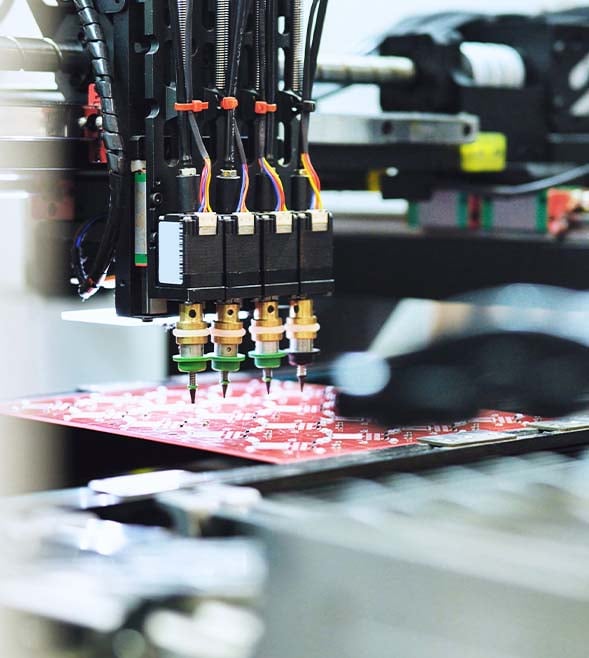
Union Budget 2026 brings MSMEs back into focus with a capex-oriented strategy that expands support through enhanced technology upgrades, cluster development, SME Growth Fund, customs tariff incentives and credit-flow reforms to strengthen competitive value chains and employment.
Detailed analysis of Union Budget 2026‑27 tax proposals for individual taxpayers, covering income tax changes, TDS/TCS rationalisation, compliance relief and procedural measures aimed at simplifying personal tax obligations.
Union Budget 2026–27 direct tax proposals emphasise clarity, certainty and ease of compliance, with measures such as implementation of the Income-tax Act 2025, simplified rules and forms, automated lower TDS certificates, extended timelines for revised returns, rationalised prosecution provisions and technology-led processes to improve taxpayer experience and reduce litigation.
Explore Grant Thornton Bharat’s pre-Budget 2026 insights across sectors including automotive, banking, technology, infrastructure, healthcare, taxation, and investment priorities shaping India’s economic, regulatory, and policy landscape.
As Budget 2026 nears, the middle class seeks tax relief, simpler compliance, and policies that encourage savings.
Economic Survey 2025-26 outlines India’s macroeconomic performance, growth drivers, inflation dynamics and fiscal consolidation, offering key policy signals ahead of the Union Budget 2026
PolicyCast Episode 22 explores the practical role of AI in transfer pricing, including how data quality, automation and predictive insights enhance benchmarking, documentation and audit risk management for tax and finance functions.
Budget 2026 should prioritise scale and staying power for India’s capital markets by enhancing liquidity, deepening equity and debt markets, strengthening long-term savings frameworks and improving access for retail and institutional investors to support resilient investment and economic growth.
India customs have seen several reforms over the years – from tariff rationalisation to digitisation to simplified procedures and schemes to support domestic industry. While high tariff rates and duty rate rationalisation remains a key industry demand, there is a need for a structured next phase focusing towards simplifying regulatory provisions, procedural laws, and leveraging technology for ease of doing business.
As India approaches Union Budget 2026, this insight reviews macroeconomic trends, RBI policy signals, credit growth, digitisation and regulatory reforms shaping financial services.
Grant Thornton Bharat’s pre-budget 2026 survey report captures industry expectations on fiscal discipline, tax certainty, infrastructure investment, GST reforms, MSME growth, trade policy and clean-energy incentives.
Happy New Year 2026! It gives us immense pleasure to present the second edition of Tax Controversy Chronicle - Grant Thornton Bharat’s quarterly publication that spotlights key judicial developments across direct tax, indirect tax, FEMA and transfer pricing.
Expert discussion on Budget 2026 expectations for GST, customs, excise and India’s evolving indirect tax framework.
Key January 2026 tax updates across direct tax, transfer pricing, GST, FEMA and trade policy impacting businesses.
India’s ambition to remain an attractive destination for global capital has long rested on policy stability and rule-based certainty.
India Union Budget 2026: India has a strategic opportunity in Budget to solidify its position as a global technology leader. By focusing on clear AI governance, robust data infrastructure, and sustained innovation funding, the nation can accelerate responsible digital transformation and compound economic value for businesses and citizens.