Technology Dealtracker: Q3 2026
Technology deal activity reflected a measured approach to growth, with businesses and investors focusing on strategic expansion, capability enhancement and long-term value creation.
For more updates follow Grant Thornton Bharat on WhatsApp
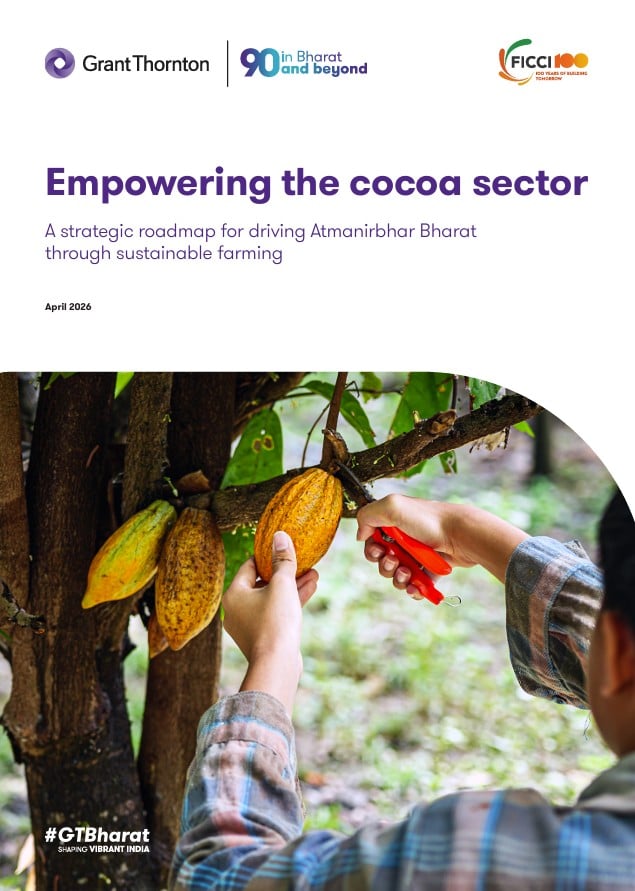
Building a resilient and self reliant ecosystem
India’s cocoa sector is approaching an inflection point. Rapid growth in domestic consumption of chocolate and cocoa‑based products, combined with sustained reliance on imports, has increased the strategic importance of cocoa within India’s agricultural and food‑processing landscape.
Strengthening India's cocoa sector growth and development is therefore critical — not only to reduce long‑term import exposure, but also to enable rural income diversification, climate‑resilient farming, and value‑chain competitiveness aligned with the vision of Atmanirbhar Bharat.
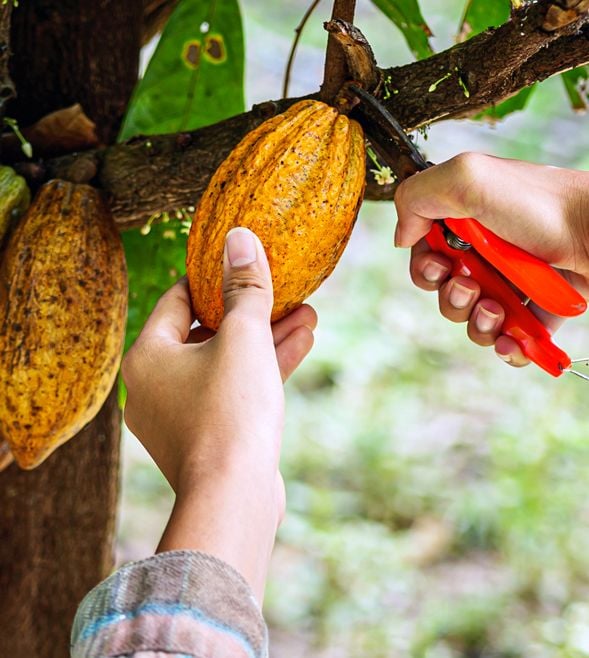
Cocoa farming in India is characterised by smallholder‑led production, concentrated largely across Andhra Pradesh, Kerala, Karnataka, and Tamil Nadu. Cocoa is cultivated predominantly as an intercrop under coconut, arecanut, oil palm and rubber plantations, allowing farmers to enhance land‑use efficiency without incremental land acquisition.
As of FY 2023–24, cocoa is grown on approximately 1.1 lakh hectares, generating domestic production of around 30,000 metric tonnes. This meets less than 20% of national demand, which now exceeds 1.8 lakh metric tonnes in bean‑equivalent terms. The resulting structural gap is bridged through imports of cocoa beans and processed products valued at over USD 866 million annually.
This persistent demand–supply imbalance presents a clear growth opportunity. India has significant untapped agro‑climatic potential, particularly across emerging regions such as the north‑eastern states, Odisha, Chhattisgarh, Telangana and parts of central India. With targeted interventions, cocoa can transition from a supplementary intercrop to a strategic commodity within India’s plantation and agroforestry systems.
Enhancing productivity and quality outcomes requires systematic adoption of improved cocoa cultivation techniques in India. Cocoa performs optimally under warm, humid conditions with temperatures between 25°C and 32°C, annual rainfall of 1,500–2,000 mm, and well‑drained, slightly acidic soils. Effective shade management is critical, reinforcing the suitability of cocoa as an intercrop within perennial plantations.
India’s cocoa plantations comprise hybrids derived from Forastero, Criollo and Trinitario genetic backgrounds, with Forastero‑dominant hybrids preferred due to their adaptability and yield stability.
Research institutions such as Kerala Agricultural University (KAU) and ICAR–CPCRI have played a pivotal role in developing high‑yielding, disease‑resistant varieties, with achievable yields of 1.5–2.5 kg per tree under recommended agronomic practices.
Scaling these practices across regions will require strengthened extension mechanisms, structured farmer training, and improved access to inputs and advisory services.
Sustainable cocoa farming in India aligns strongly with agroforestry principles and climate‑smart agriculture objectives. As an intercrop, cocoa supports biodiversity, improves soil health, and enhances micro‑climatic regulation while delivering a stable, long‑term revenue stream for small and marginal farmers.
The crop’s relatively low input intensity, compatibility with organic farming systems and long productive lifespan strengthen its sustainability proposition. In addition, cocoa‑based agroforestry systems offer emerging opportunities for participation in carbon markets, further improving farm‑level economic resilience.
Embedding sustainability within traceability and certification frameworks will be essential to position Indian cocoa competitively in premium domestic and international markets, particularly as global buyers increasingly prioritise ethically sourced, low‑carbon supply chains.
The cocoa value chain in India remains structurally fragmented. Production is dominated by dispersed smallholders, while post‑harvest handling and processing capabilities vary by state and climate. In high‑rainfall regions, wet bean sales are prevalent, whereas in drier regions farmers undertake partial on‑farm drying before sale.
India has an installed cocoa grinding capacity of approximately 99,500 metric tonnes per annum, yet utilisation remains close to 60%, primarily due to inconsistent availability of domestic beans. Consequently, processors continue to rely heavily on imports of cocoa butter, powder and paste, despite existing domestic processing infrastructure.
Expansion of domestic cocoa production in suitable clusters
Investment in decentralised fermentation and drying infrastructure
Aggregation through farmer-producer organisations
Digitisation to enable traceability, quality monitoring and farmer profiling
Rationalisation of trade policies that currently discourage domestic value addition
A more integrated and transparent value chain will be central to improving farmer price realisation, stabilising processor input supply and enhancing India’s global competitiveness.
India’s cocoa ecosystem benefits from a strong research and development foundation built through long‑standing public–private collaboration between academic institutions and industry stakeholders. However, scale remains constrained by fragmented policy frameworks, limited planting material infrastructure and uneven extension coverage.
The proposed National Mission on Cocoa provides an opportunity to unify efforts under a single, mission‑mode framework. Key priorities include:
|
1. Rapid expansion of polyclonal seed gardens to address planting material constraints.
|
4. Cluster‑based expansion across traditional and non‑traditional regions. |
|
2. Establishment of a dedicated centre of excellence for cocoa research, training and innovation. |
5. Deployment of digital platforms for traceability, subsidy delivery and market integration. |
|
3. Simplified and front‑loaded subsidy mechanisms aligned to plantation crop economics. |
A phased area expansion plan targeting nearly 2 lakh additional hectares by 2040–41 can enable India to progressively reduce import dependency while strengthening domestic value chains.
India’s cocoa sector presents a compelling case for strategic intervention. With rising domestic demand, existing processing capacity and favourable agro‑climatic conditions, cocoa has the potential to evolve into a high‑impact plantation crop supporting inclusive and sustainable growth.
By strengthening cultivation techniques, scaling sustainable cocoa farming in India, integrating the cocoa value chain in India, and enabling mission‑mode policy execution, India cocoa sector growth and development can become a cornerstone of rural transformation and agri‑processing competitiveness—firmly aligned with the long‑term objectives of Atmanirbhar Bharat.

Technology deal activity reflected a measured approach to growth, with businesses and investors focusing on strategic expansion, capability enhancement and long-term value creation.

Recent GST and customs developments bring changes to tax compliance, input tax credit (ITC), refunds, exports and dispute resolution.

We are pleased to present the October 2026 edition of The Tax Controversy Chronicle - Grant Thornton Bharat’s quarterly publication that spotlights key judicial developments across direct tax, indirect tax, Foreign Exchange Management Act (FEMA), and transfer pricing.