![Vikas Vasal]() “Though it has been a roller coaster ride, with multiple changes and clarifications, GST has evolved over the years and helped in the formalisation of the economy, as is evident from the number of registered taxpayers and the increase in revenue collections. Indeed, it is a big achievement, and not many countries of the size, scale and complexity of India have been able to implement it successfully.”
“Though it has been a roller coaster ride, with multiple changes and clarifications, GST has evolved over the years and helped in the formalisation of the economy, as is evident from the number of registered taxpayers and the increase in revenue collections. Indeed, it is a big achievement, and not many countries of the size, scale and complexity of India have been able to implement it successfully.”
Vikas Vasal, Partner, Tax
The idea of a unified indirect tax system was conceived to streamline the country’s complex taxation structure and create a more transparent and efficient economy. The initial phase of the GST journey began in 2011 when the government formed a committee to draft GST legislation. This marked the commencement of a series of constructive dialogues and consultations with stakeholders from various sectors and State Governments. The discussions were aimed at resolving concerns and garnering support for the proposed tax regime.
After years of deliberation and rigorous negotiations, the year 2017 witnessed a historic moment in India’s economic landscape when the GST was officially implemented nationwide. This marked the consolidation of numerous indirect taxes into a single unified tax, eliminating the cascading effect of taxes and simplifying compliance for businesses.
Roadblocks encountered after GST implementation
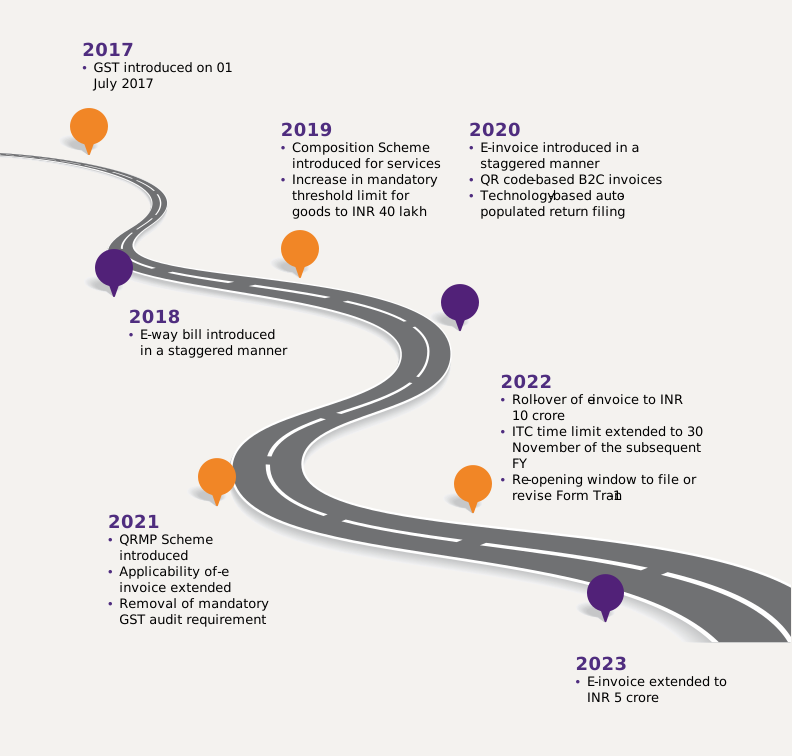
However, the immediate aftermath of its implementation presented businesses with a steep learning curve and operational challenges, as they had to adapt to the new tax framework and ensure compliance with the complex regulations. Over the next few years, GST continued to evolve and undergo improvements and amendments based on feedback and suggestions from industry experts and tax professionals. The government made efforts to address issues faced by businesses, reduce tax rates and simplify compliance procedures. These steps aimed to create a more business-friendly environment, promote economic growth and boost investor confidence in the Indian market.
The GST regime has undoubtedly transformed the Indian tax landscape by harmonising the indirect tax structure and creating a single market. While challenges still persist, the government’s commitment to addressing concerns and implementing reforms ensures that the GST continues to evolve into a robust and efficient tax system for the benefit of the country’s economy and its people.
![Riaz Thingna]() "The journey so far has been marked by notable reforms, simplification measures, increased revenue collections and strict measures against tax evasion. Having set the framework, we now expect to focus on ease of doing business, rate rationalisation, paperless and simple compliances, mandatory e-invoicing and free flow of Input Tax Credit.”
"The journey so far has been marked by notable reforms, simplification measures, increased revenue collections and strict measures against tax evasion. Having set the framework, we now expect to focus on ease of doing business, rate rationalisation, paperless and simple compliances, mandatory e-invoicing and free flow of Input Tax Credit.”
Riaz Thingna, Partner, Tax