Grant Thornton Bharat’s PolicyCast is your window into policy, tax, and regulatory developments. Each episode features expert perspectives on issues that matter to businesses, individuals, and the wider economy.
Filter insights by:
Showing 16 of 39 content results
If you ask most CFOs where they want to spend more time, the answer usually sounds reassuringly strategic: business partnering, decision support, shaping outcomes and helping business make better choices.
Most accounting standards change processes. Some change disclosures. A few quietly change the conversation. I believe Ind AS 118 belongs in the third category.
The Quarterly GAAP Bulletin (July–September 2025) highlights key accounting, auditing, and regulatory changes impacting Indian businesses. It covers updates from Ind AS, IFRS, SEBI, RBI, and international boards, offering concise insights for finance professionals.
India’s regulatory harmonisation is reshaping compliance through tech-enabled supervision, simplified norms and outcome-driven governance across RBI, MCA and SEBI.
Explore how RBI’s ECL framework introduces a forward-looking risk language, transforming credit assessment, governance, pricing, and capital strength for Indian banks.
Grant Thornton Bharat’s PolicyCast is your window into policy, tax, and regulatory developments. Each episode features expert perspectives on issues that matter to businesses, individuals, and the wider economy.
The Reserve Bank of India’s proposed Expected Credit Loss (ECL) framework marks a major shift in credit risk management for banks. By introducing forward-looking provisioning based on probability of default, loss given default, and exposure at default, the framework enhances early risk detection and capital planning. With strong governance, transparency, and global alignment, this reform positions Indian banks for improved financial resilience and compliance with international best practices.
#GTBharat’s PolicyCast is your window into policy, tax, and regulatory developments. Each episode features expert perspectives on issues that matter to businesses, individuals, and the wider economy.
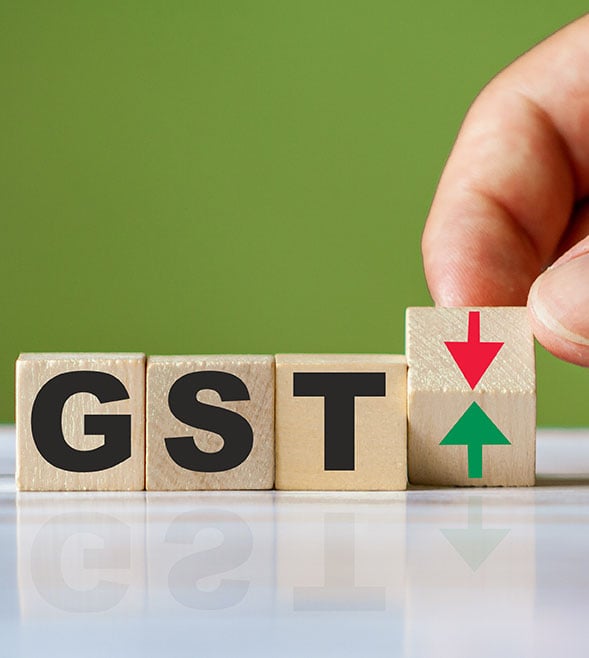
India has taken one of the biggest steps in its tax journey since GST was first launched in 2017. On September 3, the GST Council announced what many are calling “GST 2.0”-a simplified tax system with fewer slabs, clearer rules, and new compliance measures. These reforms will come into effect on September 22.
The Union Budget 2025 has once again brought the debate between the old and new tax regimes into focus.
Fatima Hunaid, the leader of Grant Thornton Bharat LLP’s transfer pricing practice, discusses India’s current tax dispute resolution landscape and schemes to provide greater certainty and accelerated decision timelines.
India's expanding economy, strategic location, and diversified sectors make it a prime investment destination for international businesses.
Explore Grant Thornton Bharat insights on Union Budget 2024, focusing on expanded income tax clearance certificates and black money act liabilities.
Explore Grant Thornton Bharat analysis of Union Budget 2024 impact on medical devices Industry, including key regulatory changes and potential challenges.
Income tax changes in Budget 2024: On the personal income-tax front, the tax slab rates have been rationalised only under the new tax regime